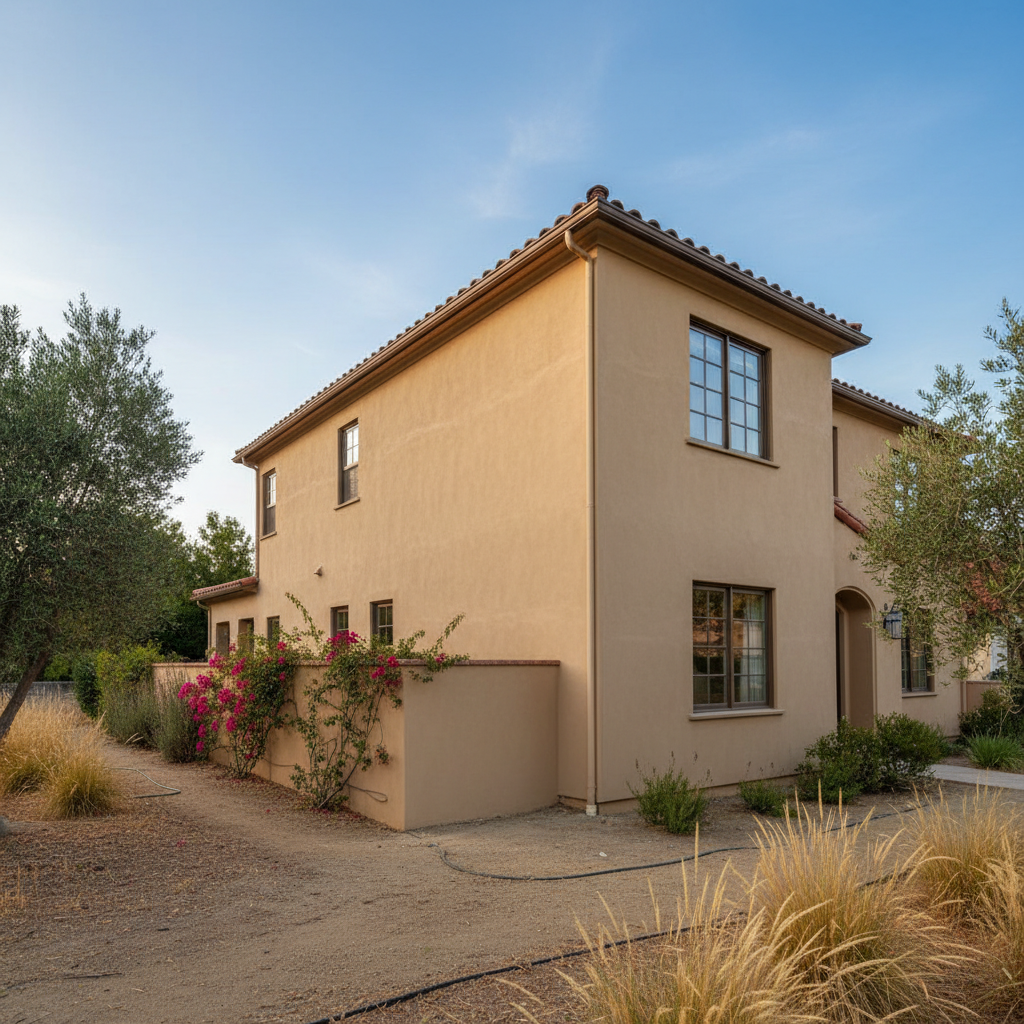
Some Stucco Installation projects crack after a single season while other Stucco Installation work holds strong for 15 to 20 years or more. Here in San Leandro, the local weather plays a very large role in how exterior plaster behaves. San Leandro experiences a mix of morning coastal fog rolling in off the San Francisco Bay, heavy winter dampness, and dry warmth as you head up toward the hills. That microclimate variation means timing your Stucco Installation or Stucco Repair in San Leandro is not something you can just guess at.
The Ideal Window for Stucco Work
Spring and early fall offer the best conditions for Stucco Work in San Leandro. During these months, temperatures stay moderate, usually hovering in the comfortable mid-60s to low 70s, and humidity levels balance out. When you schedule your Stucco Installation or major Stucco Repair during these shoulder seasons, the material cures at a steady and reliable pace. If it is too hot, moisture evaporates out of the mix too fast, which leads to weak and brittle walls full of shrinkage cracks. If it is too cold and wet, the base coats take a very long time to set.
How Local Weather Conditions Impact the Mix
Stucco Installation relies on a precise chemical hydration process rather than just drying out. If you try to apply a Scratch Coat or Brown Coat when a sudden atmospheric storm is moving across the East Bay, excess rain can wash out the uncured cement or saturate the Lath behind it. On scorching summer days in San Leandro, the work demands constant misting of the walls so the material does not dry prematurely. Synergy Stucco San Leandro closely monitors daily temperature swings and marine moisture patterns before laying down any Stucco material in San Leandro.
Protecting Your Stucco Year-Round
Keeping your Stucco investment safe in San Leandro does not stop once the Finish Coat hardens. Winter rains put Stucco exterior walls to the test, especially around older neighborhoods in San Leandro where wind-driven moisture hits hard. Homeowners should take a walk around the house twice a year, once after the heavy winter rains clear and again before summer sets in. Look for hairline fractures, staining near windows, or bubbling paint on the Stucco. Catching small Stucco cracks early stops water from getting behind the barrier and causing hidden rot in your framing. Keeping gutters clear and making sure sprinklers are not constantly soaking your lower walls will also add years to your Stucco exterior's life in San Leandro, CA.